
How Judith Polgar became the world's best female chess player?
and some notes on expertise.

I have always been curious about how people become experts in their field.
In early 2015, I came across the work of two psychologists that helped expand and challenge my understanding of expertise.
Their names were Karl Anders Ericcson and Laszlo Polgar and here is a brief summary of their life’s work.
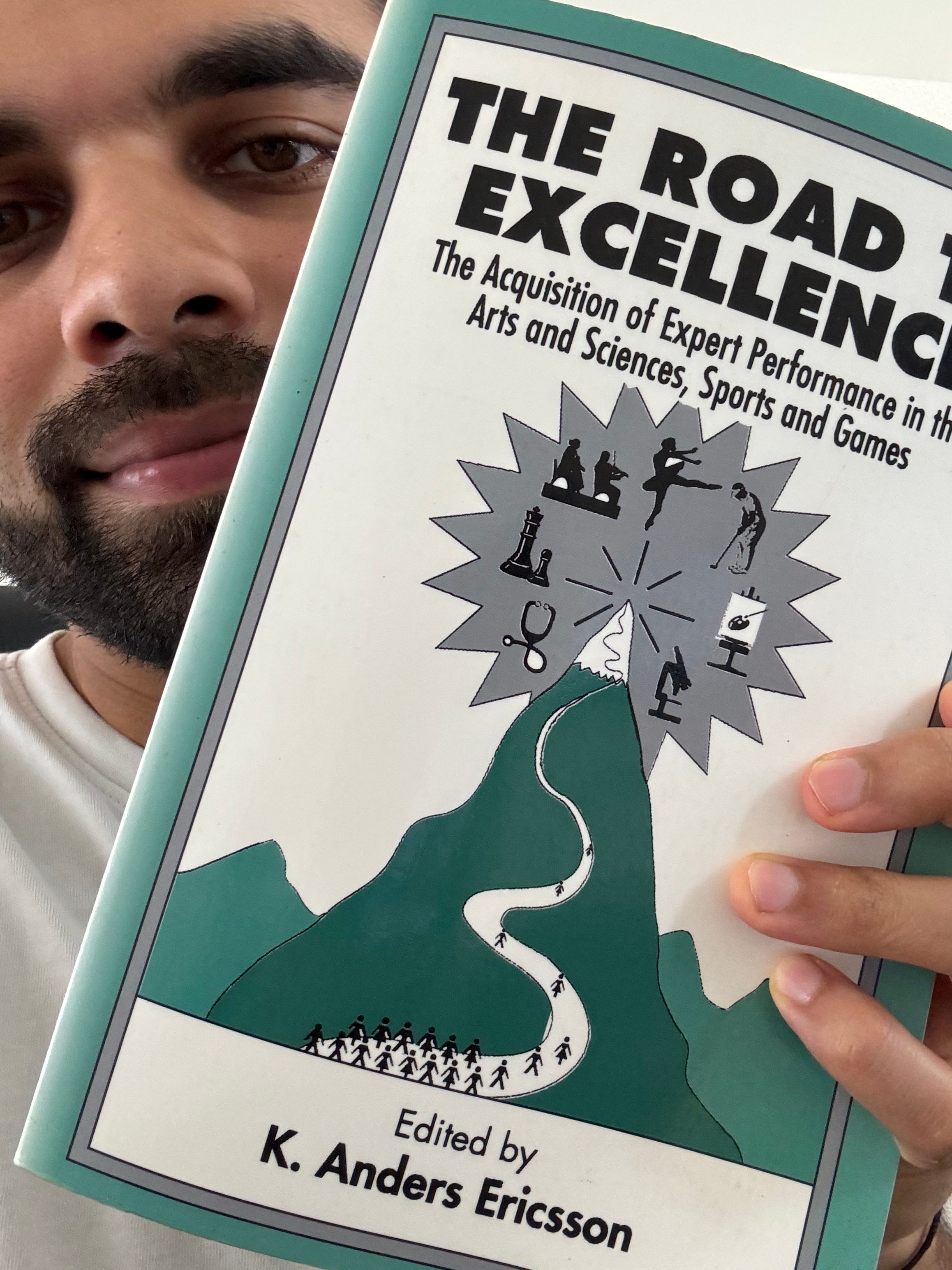
Karl Anders Ericsson’s research changed our understanding of expertise and human performance. He found that expert-level skill comes mostly from deliberate practice rather than innate talent. This practice involves structured, purposeful efforts with feedback aimed at improving performance over time. He showed that experts in various fields, such as music, chess, and sports, typically put in around 10,000 hours of such practice over about ten years. However, he stressed that the quality of practice is more important than just the number of hours. Ericsson illustrated that expert performers focus on their weaknesses, push their abilities beyond their current limits, and benefit from ongoing coaching and mentorship. He also debunked the idea of the “natural genius.” He argued that the brain and body can adapt significantly with the right training. His work challenged traditional beliefs in education and performance psychology. It shifted the focus from innate potential to creating effective learning environments and long-term effort, forming the foundation for the science of expertise. Here is a picture with a book by him that deeply shaped my thinking on expertise.
László Polgár’s work was a bold real-world experiment in the nature vs. nurture debate. He believed that “geniuses are made, not born.” As a Hungarian educational psychologist, Polgár aimed to show that any child could reach exceptional expertise with early, intensive training in the right environment. He home schooled his three daughters Susan, Sofia, and Judit by focusing on chess from a very young age. They received structured practice, access to top coaching, and an intellectually rich environment. All three daughters became world-class chess players. Judit Polgár is widely considered the best female chess player in history. Polgár discovered that talent can be developed through early specialization, consistent practice, and parental involvement. He found that excellence depends more on opportunity and effort than on natural ability. His work provided strong anecdotal evidence that elite performance can be cultivated through intentional upbringing, challenging conventional views on giftedness and education. Here is a picture of the Polgar family lost deep in thought over a game of chess.
The Polgar Experiment
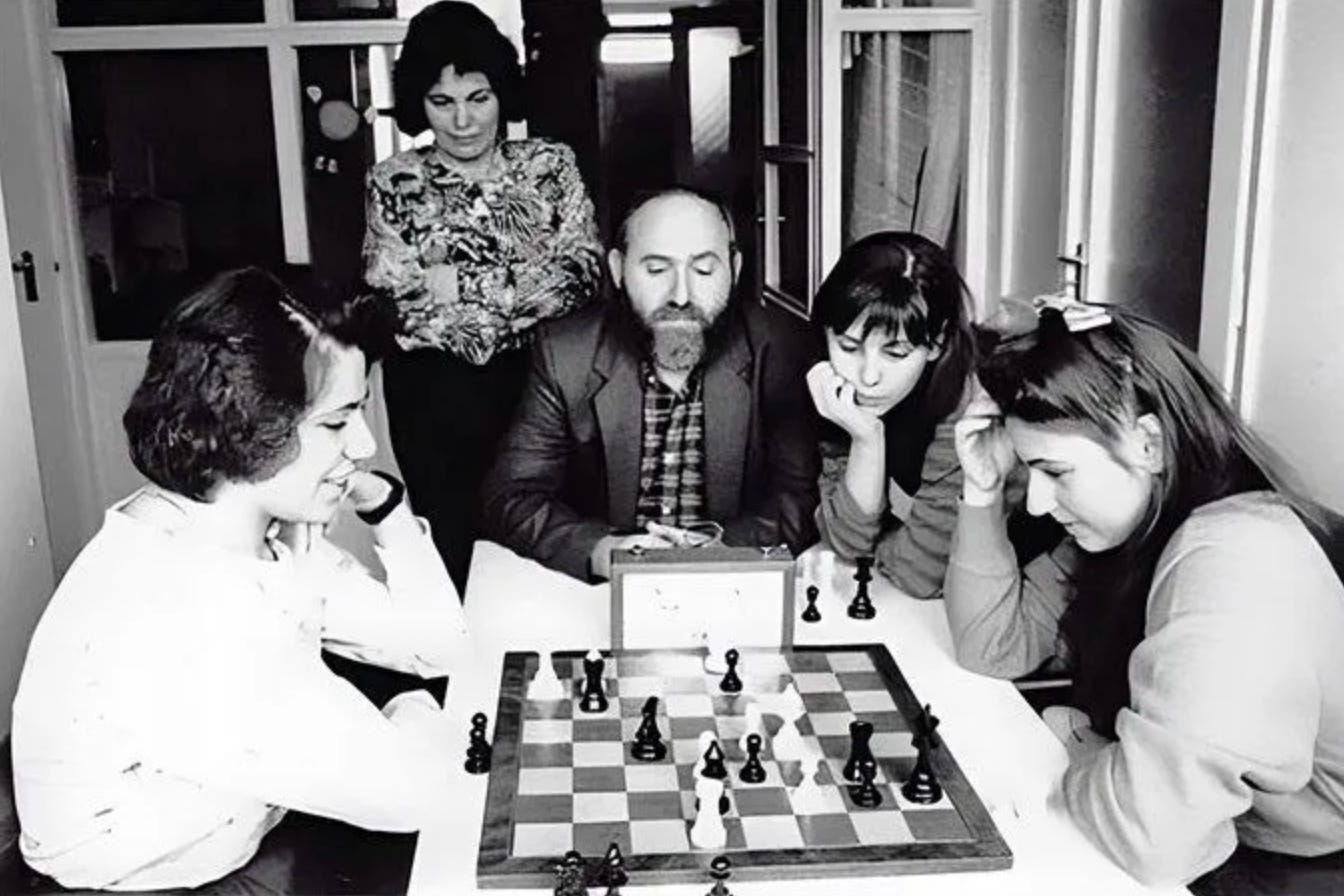
Laszlo Polgár was born on 11 May 1946 in Gyöngyös, Hungary. He studied intelligence when he was a university student and then became a chess teacher and educational psychologist. He spent a considerable amount of time studying and analyzing the life stories of geniuses and noticed that they all started at a very young age and studied intensively. He concluded that if he took the right approach to child-rearing, he could turn any healthy newborn child into a genius. In 1965, Polgár conducted an epistolary courtship with a Ukrainian foreign language teacher named Klara. In his letters, he outlined the pedagogical project he had in mind. He wanted to start a family and raise his children to become geniuses in their fields and to test his theories on intelligence. He and Klara married in the USSR, whereupon she moved to Hungary to be with him. They had three daughters together, Susan, Sofia, and Judit, whom Polgár home-schooled, primarily in chess but also in Esperanto, German, Russian, English, and high-level math. They finally decided to focus on Chess. Laszlo and Klara wanted to create the best possible learning environment to make their three daughters experts in the game of chess. They succeeded because all three daughters became chess prodigies. Judit is widely considered the greatest female chess player ever, as she is the only woman to have been ranked in the top 10 worldwide, while Zsuzsa became the Women's World Chess Champion.
Understanding the Experiment
As an educator, I wanted to analyze and breakdown Judith Polgar’s learning experience through the lens of these three questions:
Curiosity - Why she learned?
Competence - What she learn?
Creation - How she applied what she learned?

Curiosity - Why she learned?

Judit Polgár, often seen as the best female chess player ever, was born in 1976 in Hungary. She grew up in an unusual and intellectually stimulating environment. Her parents, László and Klára Polgár, believed that geniuses are made, not born. Rejecting regular schooling, the Polgárs immersed their daughters in a structured, chess-focused upbringing. They exposed them to international tournaments, elite coaching, and a wealth of chess literature. Judit, the youngest and most aggressive player among her sisters, started playing at just five years old. She quickly showed exceptional talent. By age 12, she was already competing against and beating grandmasters. This proved her father's theory that extraordinary ability can be developed through focused practice. Her upbringing included not only chess but also a love for intellectual challenges, languages, and independent thinking. This shaped her into a fierce competitor who would eventually break numerous records in the chess world.
Competence - What she learned?

Judit Polgár’s education and training were quite unconventional, created by her father, László Polgár, as part of his early specialization experiment. She and her sisters were homeschooled, with a curriculum that prioritized chess while also covering foreign languages, history, math, and philosophy. Unlike traditional schools, Judit’s education was personalized and immersive. She dedicated nearly all her time to mastering the game. Her training included solving complex chess problems, analyzing historic games, and playing against both human and computer opponents. She benefited from well-known chess coaches and international competition from a young age, including training sessions with famous grandmasters. Judit learned several languages to communicate with the worldwide chess community, enhancing her education. By studying strategies from legends like Bobby Fischer and Garry Kasparov, she developed a distinct and aggressive playing style. This intense and focused training helped her achieve grandmaster status by age 15, making her the youngest to do so at the time, breaking Bobby Fischer’s record. Her education illustrated her father’s belief in focused practice and specialized training, proving that extraordinary talent can be systematically developed.
Creation - How she applied what she learned?

Judit Polgár’s chess career features remarkable achievements that broke gender barriers and established her as one of the greatest players in history. She became a grandmaster at 15 years and 4 months in 1991, setting a record previously held by Bobby Fischer. Unlike many female players, Judit competed only in open tournaments instead of women-only events, demonstrating that she could compete with the world’s top male players. She consistently ranked among the top 10 players globally, reaching her highest rating of 2735 in 2005, the highest ever for a woman in chess history. Judit defeated several world champions, including Garry Kasparov, Anatoly Karpov, and Magnus Carlsen—a feat unmatched by any other female player. She played a significant role in Hungary’s gold medal win at the 1990 Chess Olympiad and later led the Hungarian national team in several tournaments. In 2011, she won the renowned Rapid World Chess Championship, showcasing her versatility. Judit retired from professional chess in 2014 but left behind an exceptional legacy, proving that gender doesn’t matter in elite competition and inspiring generations of players, both male and female, to strive for excellence in the game.
You can learn about her career and important statistics at this link from Chess.com. You can also learn about this family’s journey through a TED talk by Judith and a video on the family.
Thoughts on Expertise
I had conflicted thoughts about this experiment and the eventual outcome. I was amazed by the outcome of this experiment. The children became chess experts and chess grandmasters. I also reflected on the pressure and lack of social exposure that the children faced through this experiment. But all three sisters talk positively about this experience with their parents in most interviews and talks. However here was what stayed me as a student of the academic literature on expertise studies.
Deliberate Practice Matters Most: The Polgar sisters did not have innate talent, but they did have many years of structured, focused practice designed to improve specific skills.
10,000 Hours is a Rule of Thumb: The Polgar sisters got 10,000+ hours of quality practice over a 10 year period in a low pressure family environment to develop their skillset as chess players.
Expertise is Domain-Specific: The Polgar sisters were experts in Chess but their skills did not transfer easily across domains.
Feedback is Crucial: The Polgar sisters got lots of immediate, specific feedback to correct mistakes and refine performance from their parents.
Stretch Beyond Comfort Zone: The Polgar sisters were encouraged to study and practice chess by constantly pushing just beyond their current abilities and not by simply repeating what they already know.
Mental Representations: The Polgar sisters developed better mental models of their domain allowing them to recognize patterns and solve problems faster than other chess players that did not play as many games growing up.
Natural Talent is Overrated: The Polgar sisters did not have natural talent but had lots of early exposure, consistent motivation, and long-term effort to develop their skills.
Start Early, But Not Too Early: The Polgar sisters got early engagement to Chess but were also exposed to practice that was age-appropriate by their parents.
Motivation and Grit Are Key: The Polgar sisters showed persistence, emotional resilience, and a desire to improve, even through failures and boredom.
Training Trumps Performance: The Polgar sisters got a chance to continually train under expert guidance and that allowed them to outperform those who just keep performing without the same support systems.
If you are interested in exploring the academic literature on expertise, I would recommend starting with these two publicatons:
The Cambridge Handbook of Expertise and Expert Performance (Cambridge Handbooks in Psychology) by K. Anders Ericsson and Robert R. Hoffman published in 2006.
The Road To Excellence: The Acquisition of Expert Performance in the Arts and Sciences, Sports, and Games by K. Anders Ericsson published in 1996.
You can also listen to this video on the topic by Karl Anders Ericsson on how deliberate practice plays such an important in the development of long term expertise. He also talks about the development of expertise in a game like chess in this video (1:30 to 1:50).
What are your thoughts on this experiment by Laszlo Polgar?
Do you think this experiment can be replicated in other areas or disciplines?
I hope you enjoyed this deep dive into expertise through the life of a chess player.
Until next time,
Keep Learning
Abhishek
References/Notes
The images used in this article are all open source and accessed from the Internet. I would be happy to add a image credit wherever needed if you can send me an email with further details at abhishekashokshetty@gmail.com
Ishikawa, S. (2025, April 4). The Genius Factory: How a Radical Experiment Created the Greatest Female Chess Players in History. Medium. https://medium.com/@sorakawashi/the-genius-factory-how-a-radical-experiment-created-the-greatest-female-chess-players-in-history-4c7e53e67458
Maass, P. (1992, March 10). HOME-GROWN GRANDMASTERS. Washington Post. https://www.washingtonpost.com/archive/lifestyle/1992/03/11/home-grown-grandmasters/82928ac3-a934-4d0d-929b-d89ba020fa25/
Polgar Family History - https://www.chess.com/forum/view/fun-with-chess/the-polgar-family-history
Judith Polgar Career Statistics - https://www.chess.com/players/judit-polgar