
How visual art captures emotions?
and some notes from a weekday gallery crawl in Mumbai

The Mumbai Gallery Association1 was formed by the city’s leading contemporary art galleries with the aim to expand the city’s vibrant art scene. Every second Thursday evening, the MGA organizes an event called, ‘Art Night Thursday’2 where the public is invited after hours to meet the people that make art, the shows and gallerists. The best part of this initiative is that it is Free for all.
In August 2025, I was visiting the Subcontinent Gallery3 in Fort, Mumbai for Art Night Thursday. The founders of this gallery created this space to explore South Asia’s imprint on visual and material culture across time and space. The exhibition on display that night was titled, ‘Where the Light Falls Gently’ and the artist’s name was, Hemali Vadalia. Here are some paintings from this exhibition and collection that caught my eye because of the way the artist captured emotions through these visual portraits. I left some observation notes under each painting.
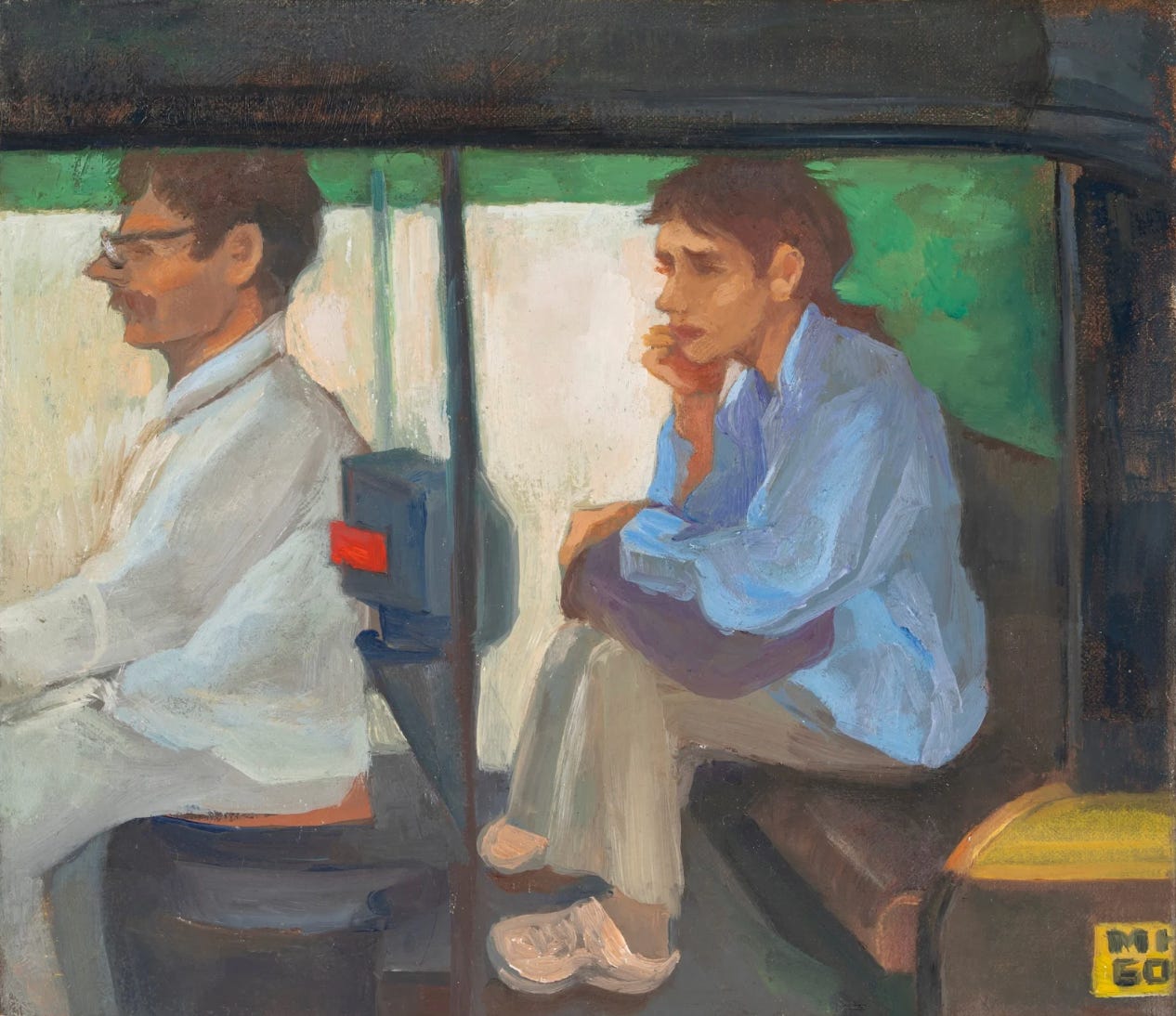
I notice a sense of concern because of the frown on the face of the lady sitting in this auto rickshaw.
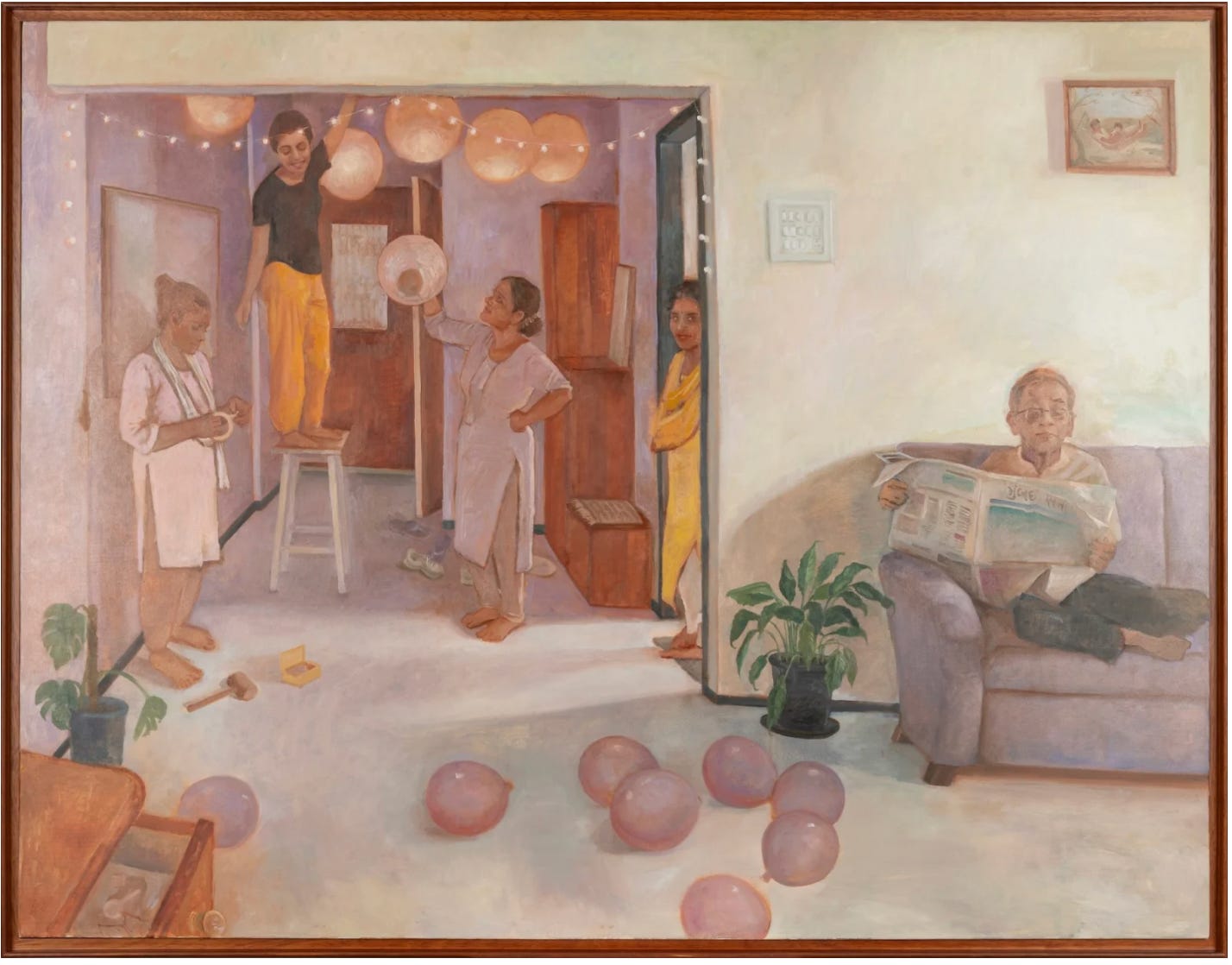
I notice a sense of joy and festivity as depicted in the calm and curious smiles of the people in this painting.
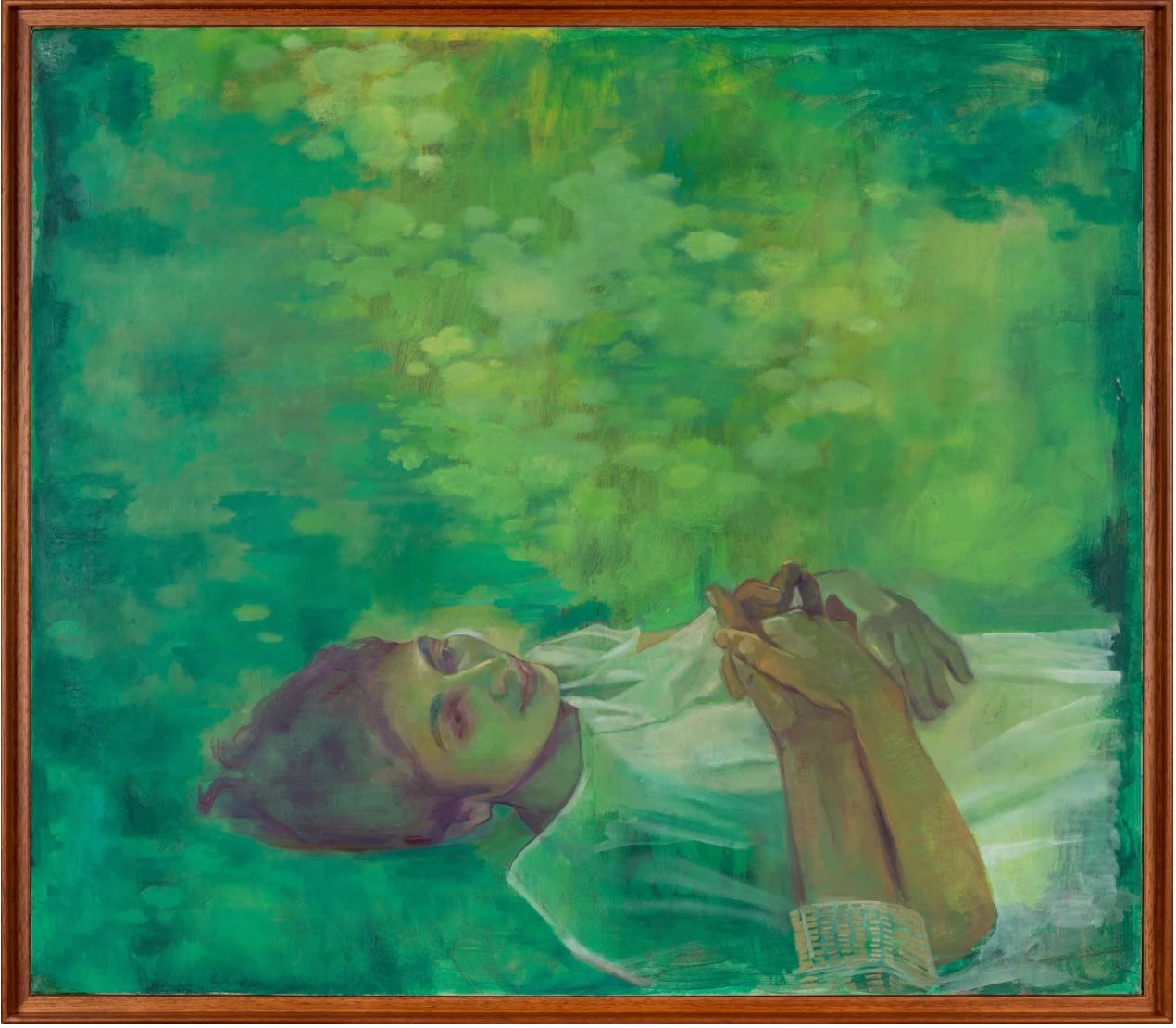
I notice a sense of gratitude and care in the gentle upward smile of the character in this painting as she looks up at the sky while holding the hands of a loved one.
These paintings and the way emotions were captured on the faces of the main characters got me thinking about the work of one of my favourite academic researchers.
Paul Ekman’s Facial Expressions Research
Paul Ekman is a psychologist and pioneer in the study of emotions. He is best known for his groundbreaking research on facial expressions and their universality across cultures. Building on Darwin’s theory of emotional expression, Ekman demonstrated through cross-cultural studies in the 1960s that certain “basic emotions” such as happiness, sadness, anger, fear, surprise, disgust, sadness, surprise, and contempt are universally recognized through facial expressions, regardless of cultural background. He developed the Facial Action Coding System (FACS) to systematically analyze minute facial muscle movements, including microexpressions that last only fractions of a second but can reveal concealed emotions. By empirically establishing the link between emotion and facial expression, Ekman’s research has been instrumental in showing how human emotions are both biologically hardwired and socially significant. He explained his work better in these two short videos from his Youtube Channel4.
In the first video (linked above) he spoke about how it took him 8 years to codify and quantify all movements the face can make through cross cultural studies. He published his research in a paper in 1978 titled, Facial Action Coding System5.
In the second video (linked below) he commented about how “the human face is a universal signalling system to express seven basic human emotions” genuinely or manipulatively.
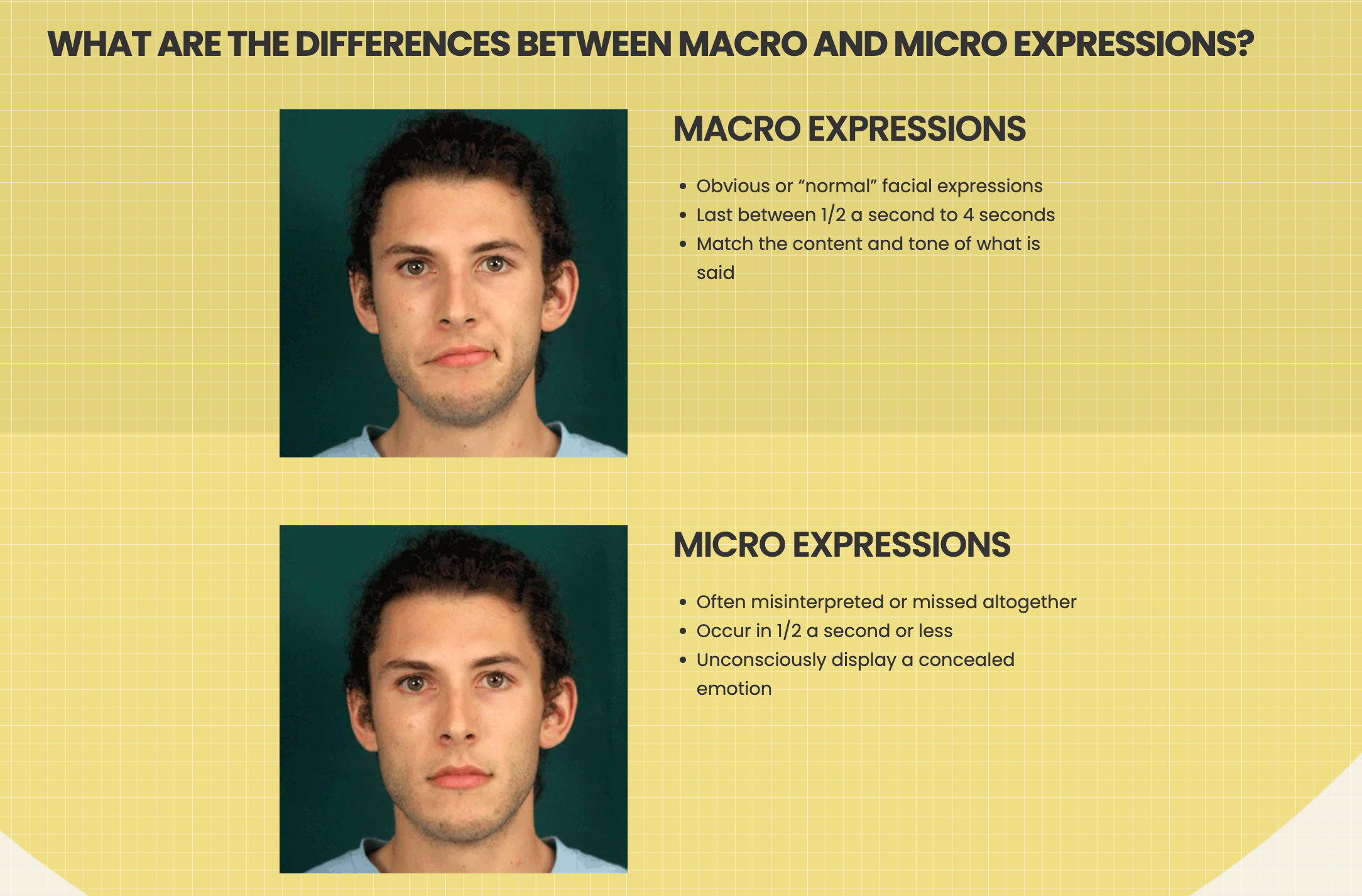
He described how these seven basic human emotions are communicated by humans through a set of macro expressions and micro expressions in this post and image on his blog6. According to his research,
Micro expressions occur in everyone, often without their knowledge. There is no way to prevent them from occurring. Learning to detect this leakage is critical for emotional intelligence7 and deception detection8.
I then found another video by behavioral investigator, 9, who discusses each of the seven universal micro-expressions and how to detect the hidden emotions underneath words.
In this Oregonian video10 she described the subtle facial changes that we display when we express each of the seven basic emotions
happiness - upper cheek muscles are engaged and pushed up with a wide smile
sadness - make a frown, corners of mouth pulled down, puff out lower lip, pinch inner corners of eyebrow together, eyes watery and distant
anger - harden lower lips, tense your lips, two vertical lines between eyebrows, eyes focused
fear - eyelids and eyebrows pulled high up, open your eyes wide, mouth wide open, eyes focused and attentive, fear has flat eyebrows
disgust - show both set of teeth, crinkle your nose up, eyebrows pulled down
surprise - raise your eyebrows up your forehead, drop your mouth open (a bit longer than the fear mouth expression), eyes not focused and wandering, surprise has upside down eyebrows
contempt - a one sided mouth raise, looks like a smirk
In the rest of this essay I want to use some of these guidelines from Paul Ekman and Vanessa Van Edwards to understand and describe the emotions I observed in paintings by my favourite artists. I accessed these images from the Google Arts and Culture website and have added information about the museum and collection where that painting is housed in the visual. I have not added the background and context of the painting or the artist because I want to focus on the emotion communicated in the painting through facial expressions. You can explore the web archives and paintings of 14,000+ artists at Google Arts and Culture website. I promise you it is a lot more fun than doom-scrolling.
How visual art captures emotions?
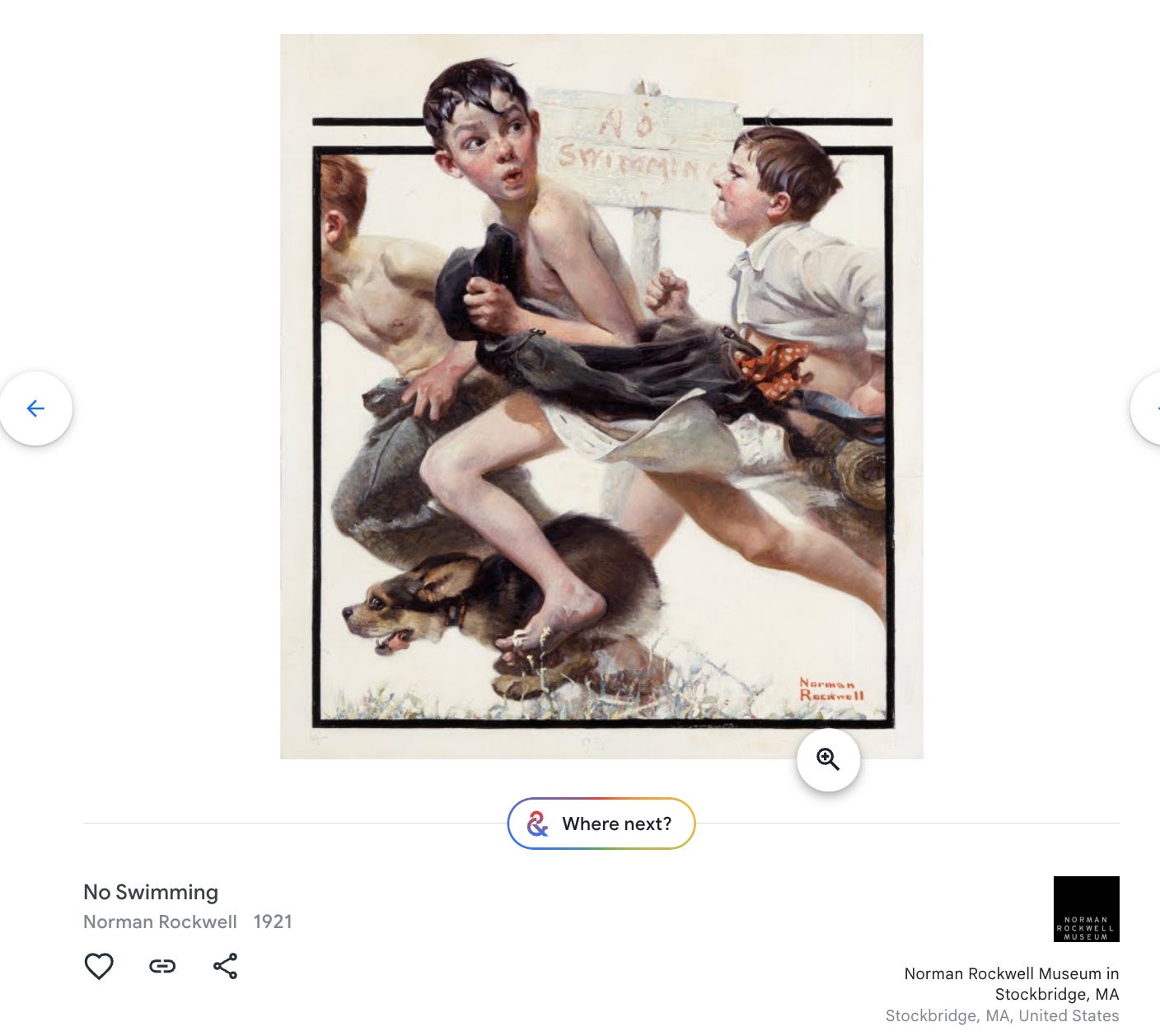
The boys are running from someone in this painting and there is fear expressed on their faces. The boy in the middle has his eyelids and eyebrows pulled high up, his eyes open and focused, his mouth wide open and his eyebrows are flat and show concern. The boy in the back has his mouth closed tight and eyes focused straight forward. Both the boys have fear and concern written all over their face.
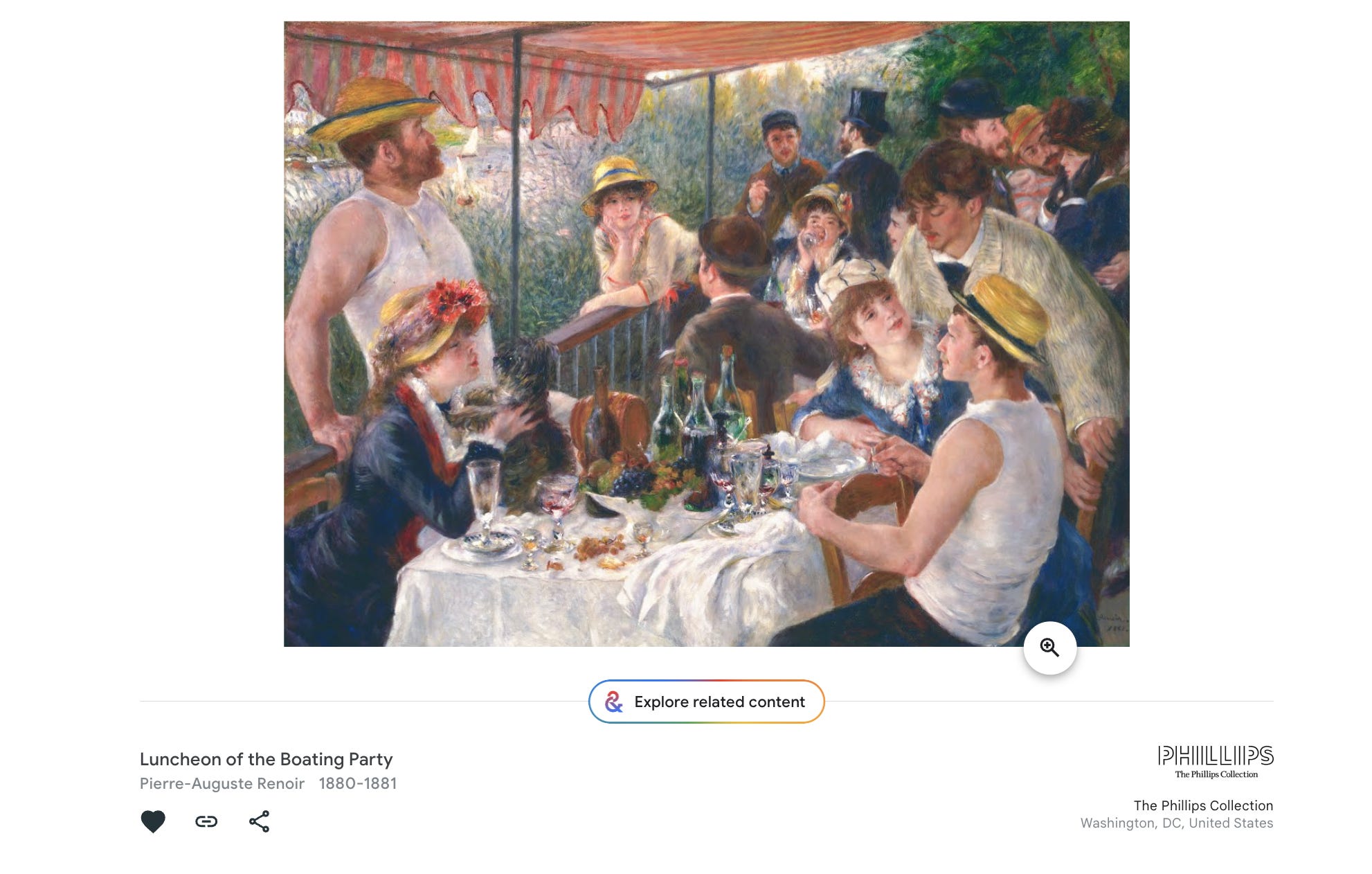
In this painting the people are at a party and enjoying the weather and food. A lot of the people in this image look like they are much younger and courting one another for a romantic relationship. There is a lady leaning against the railing and looking dreamily at a man in front of her with her head slightly tilted and warm attentive eyes. Up front to the bottom right there is a group of three young people looking at each other hopefully and longing for some attention. To the bottom left there is a man leaning against the railing looking out for some company at this party. Most of them carry a neutral flirtatious look and are trying to hold another person’s attention in this painting.
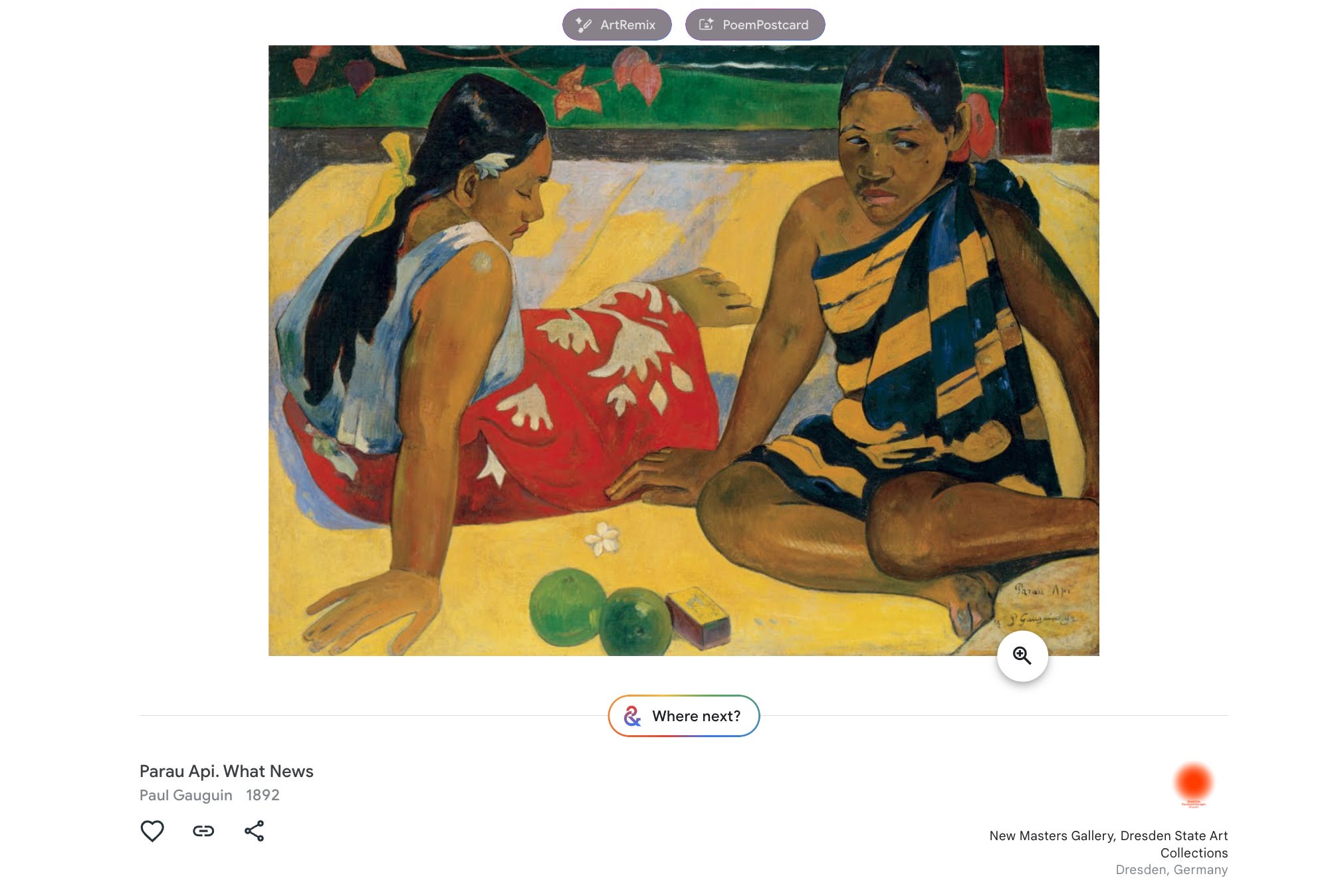
In this painting both women have a one sided mouth raise that looks like a smirk. They seem to be bothered by something. I think they just found out about some bad news and feel contempt, shame or regret at this moment.
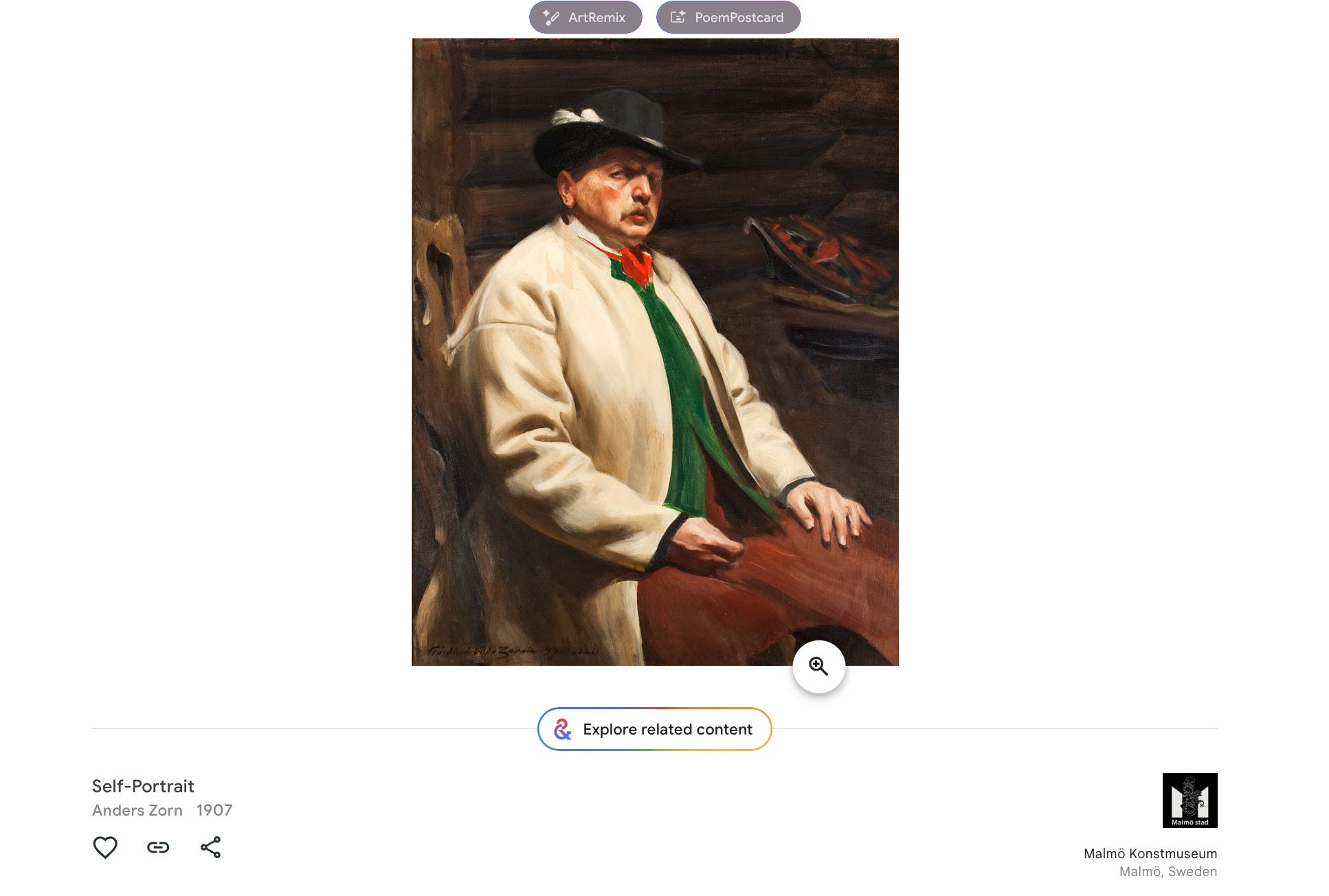
In this painting the man looks angry because you can see two faint lines between his eyebrows. His lips are slightly tense and he is holding your gaze fiercely. He looks quite well off. I wonder if he just had an argument with a neighbour or customer before this painting was created.
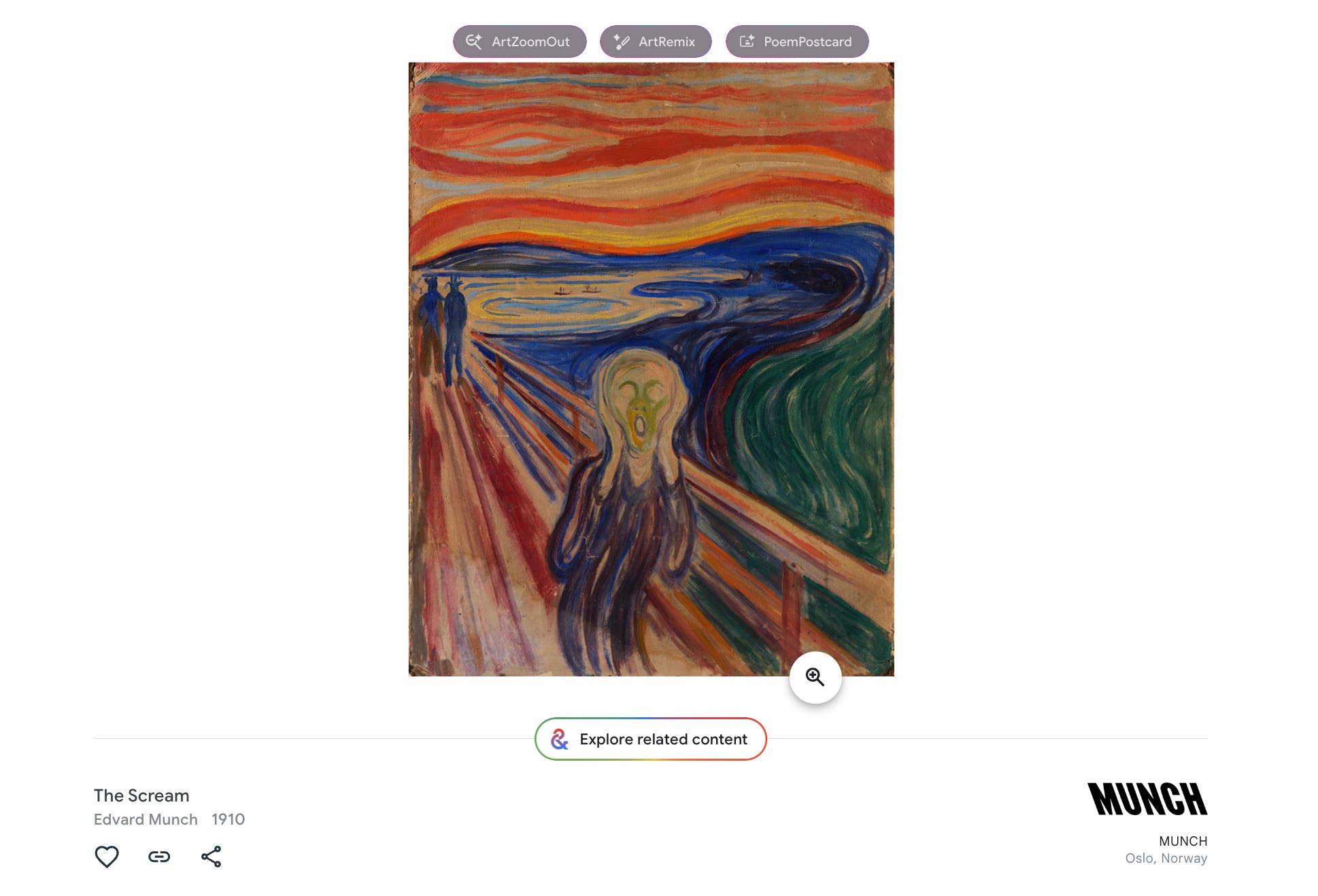
The person is the middle is fearful and scared. Edvard Munch was a master at capturing these emotions through his paintings. I can see the person’s eyelids and eyebrows pulled high up, their eyes wide open and their mouth wide open. This person has just observed something that caught their attention and that thing is completely out of the ordinary in a bad way.
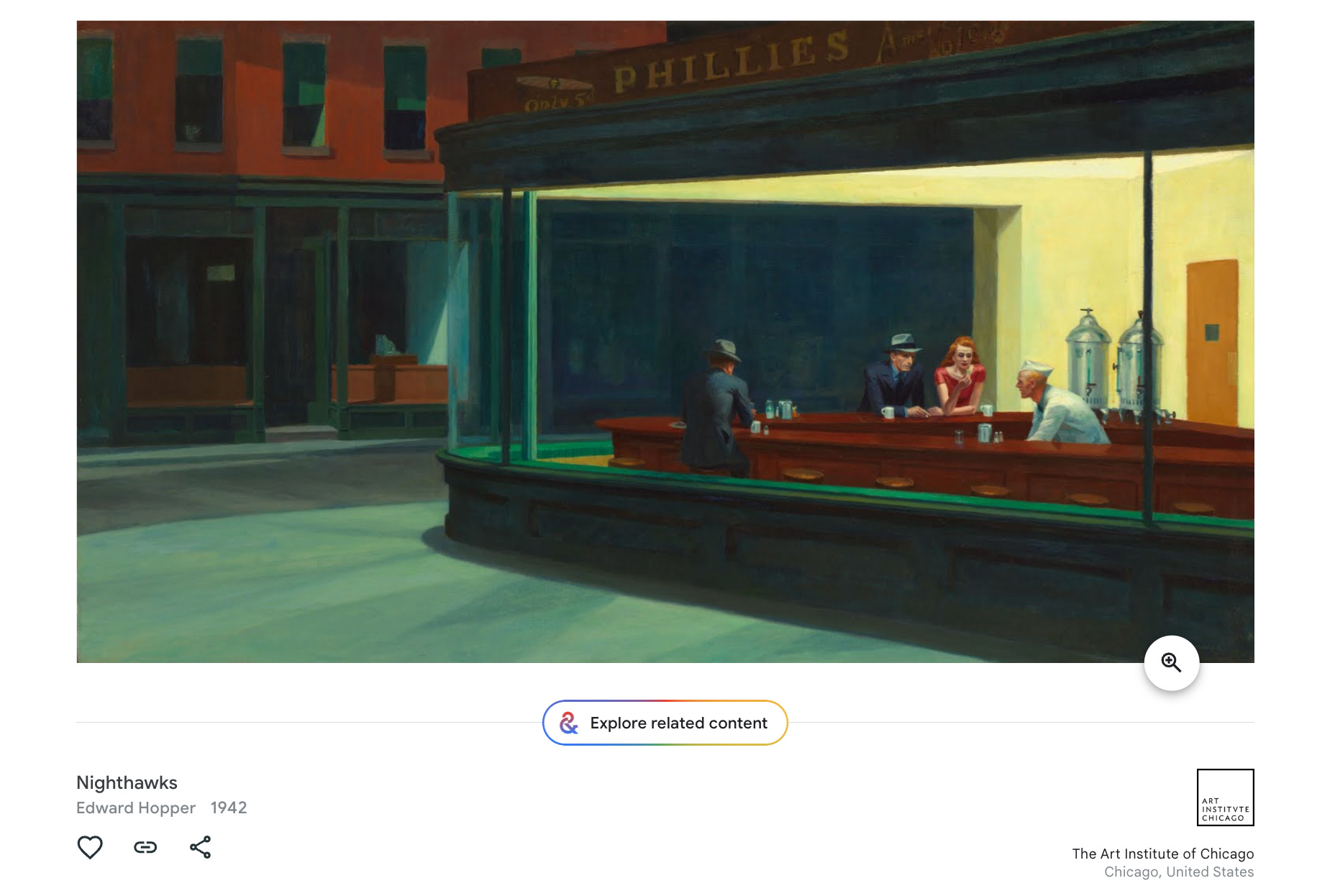
This painting does a good job capturing the emotion of sadness and melancholy. The man and woman sitting at the bar table make a frown, the corners of their mouths are pulled down, the inner corners of eyebrow are brought together and their eyes are watery and distant (on close observation). I think the people in this image are lonely or worried about some impending doom. I wonder if they are navigating a difficult personal or professional challenge and meeting here to discuss the same on a quiet weekday night. The streets outside are quite empty and I think it is close to closing time at this establishment.
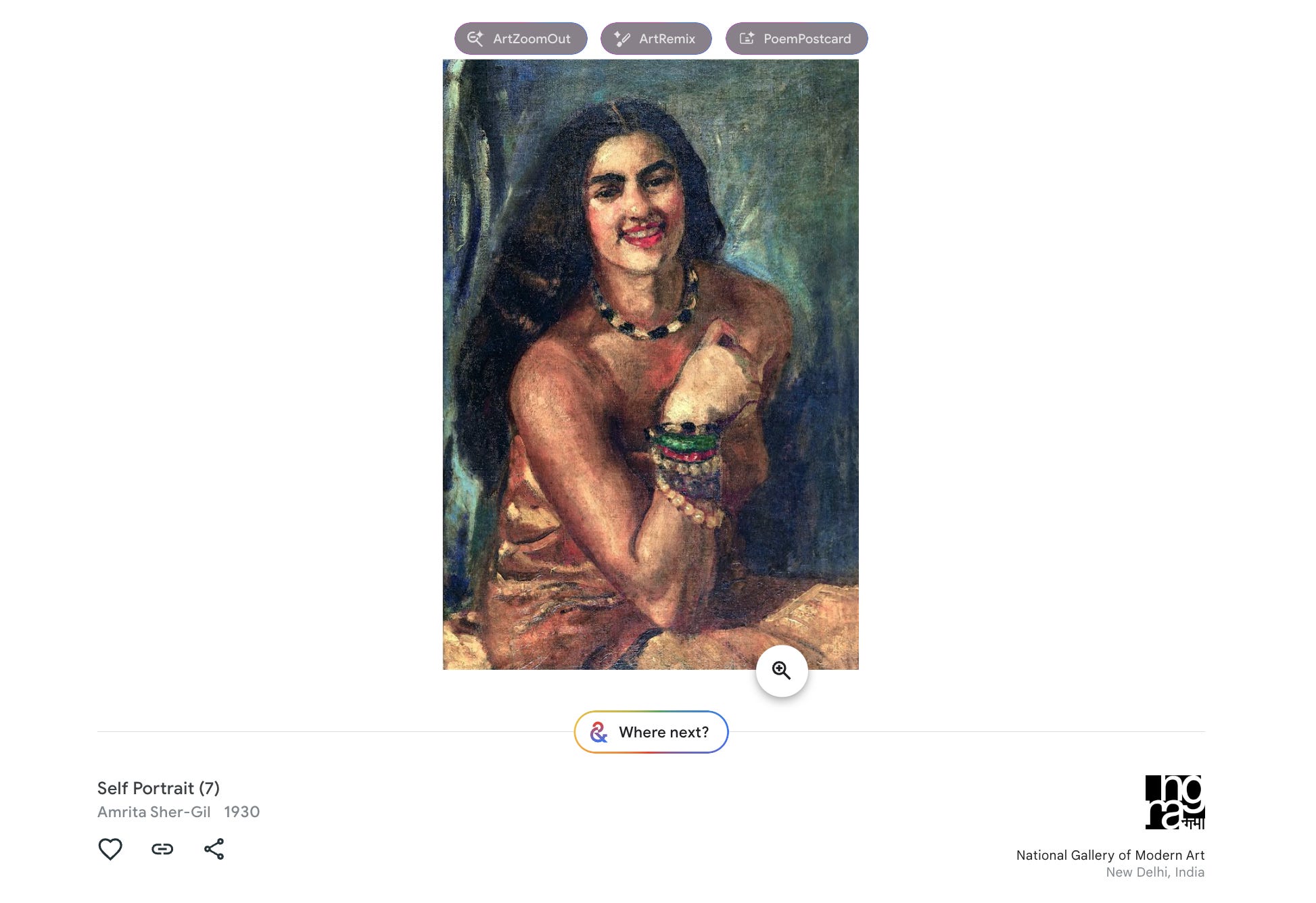
In this painting the lady is genuinely happy. Her upper cheek muscles are engaged and pushed up with a wide smile. She must be in the company of a close loved one and I think it is a time of the day when she is well rested and well fed.
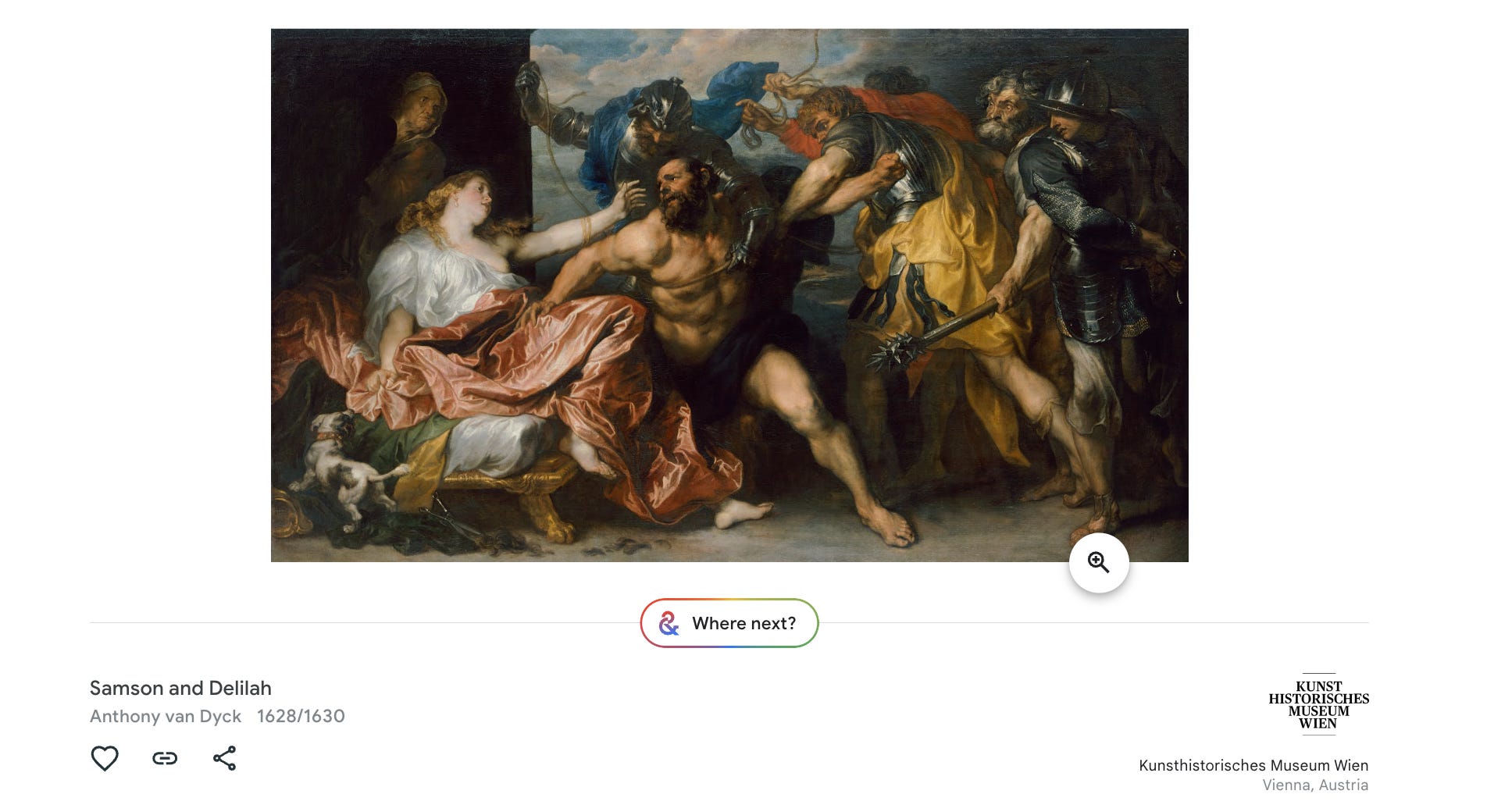
In this painting the man in the middle is scared and fearful as his mouth and eyes are wide open. He is being pulled away from a lady sitting on the left by a large group of men who are in combat outfits. The lady is also shocked by this event as you can see her eyebrows raised up and her mouth dropped open. The men pulling him away are visibly angry as their lips are tense and there are scrunched up lines between their eyebrows. This is a very stressful painting for me as a viewer because it captures a moment of forceful separation and violent disagreement.
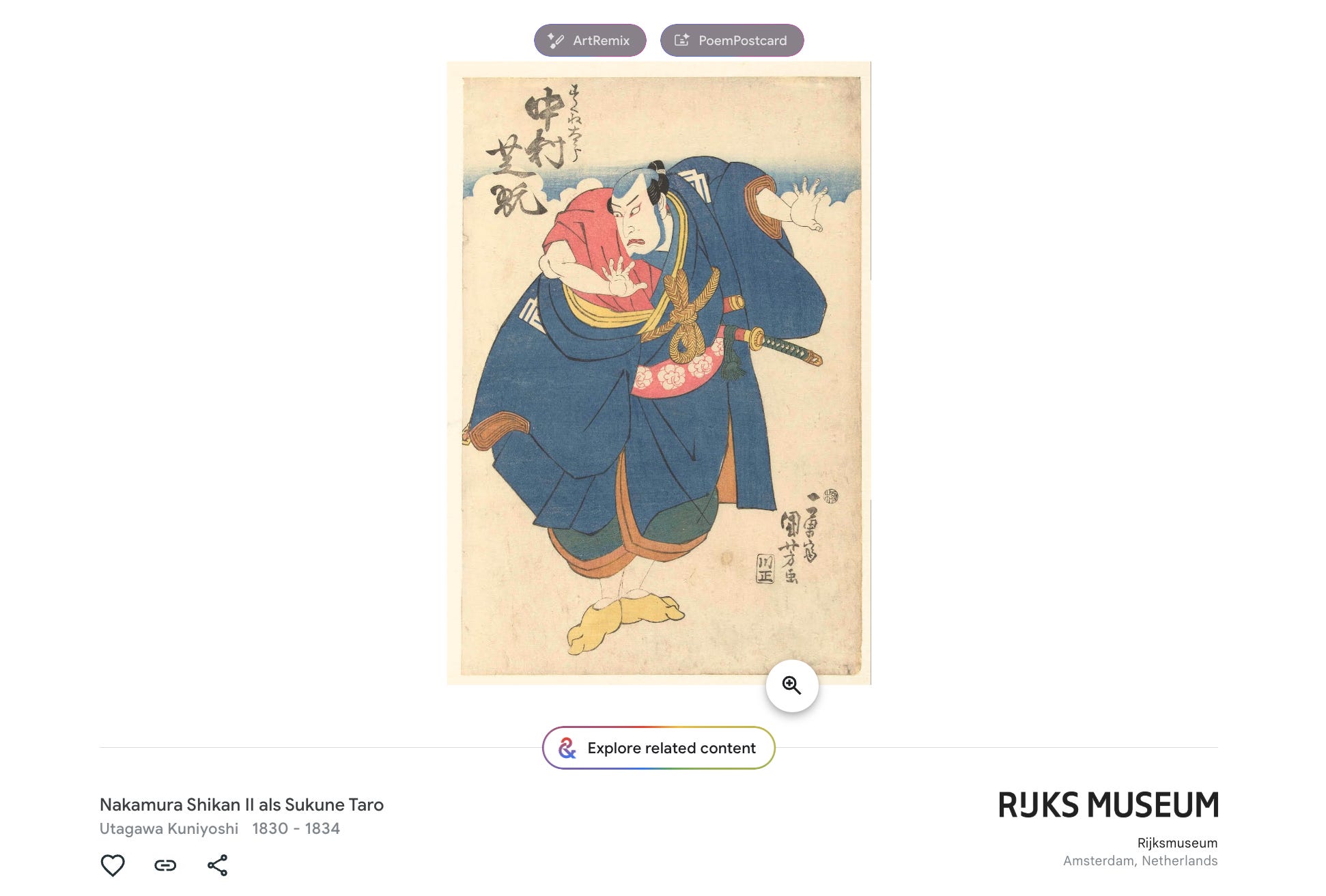
This is one of the few sketches that does a good job to capture the emotion of disgust. The person in the middle has their nose crinkled up, mouth in the shape of a distant frown and eyebrows pulled down. I wonder if they have seen something that they do not want to touch. I think it could be an insect or animal that has entered their private home space.
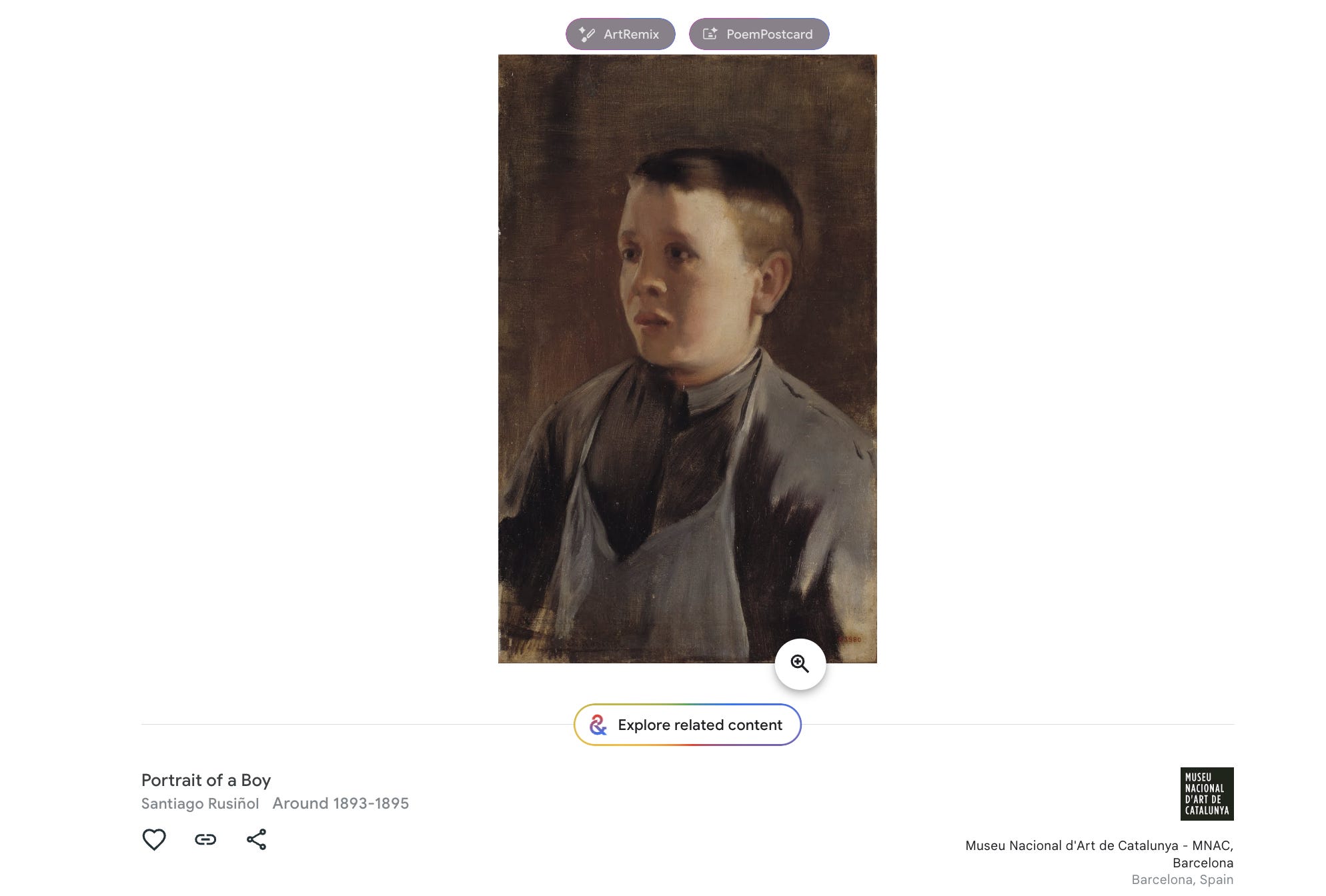
The boy in this painting looks fearful and surprised. I think his emotion of surprise will soon turn to fear because there is a genuine look of concern on his face. I wonder if he has just received some devastating news about a family member or about his job. He looks quite young and must be an apprentice or new employee.
A new found appreciation for visual arts
I am developing a new found love and interest for art by exploring physical spaces in my city and digital archives on the Internet.
I think writing this essay was a way for me to reflect on the many thoughts I have as I engage with art I am curious about in these fluid creative spaces. I am excited to write more such personal essays on different ways to think about art.
I have some questions for you as a reader of this essay.
How do you engage with visual art in your life? What kinds of spaces are available in your city to engage with visual art? Which artists do you follow online? How do you engage with that artist’s work on the Internet? What are some creative ideas to have a mental conversation with a piece of visual art you love?
Can you send me a web link to one piece of visual art that you believe beautifully captured a human emotion through specific facial expressions?
I would love to hear your thoughts or observations or recommendations in the comments of this essay.
Going ahead I hope to continue writing one long form essay for you each week. The essay will be about people, ideas or culture. It will arrive in your inbox every Sunday. I am I excited to continue writing this newsletter for you.
You can explore 175 other Education Coffee editions at this link.
Until next time,
Keep Learning
Abhishek
References and Links
Mumbai Gallery Association Website - https://www.mumbaigalleryassociation.com/
Art Night Thursday Information - https://www.mumbaigalleryassociation.com/mga-art-night-thursday
Subcontinent Gallery Mumbai Website - https://subcontinent.in/
Paul Ekman’s Youtube Channel - https://www.youtube.com/@thepaulekmangroup/videos
Ekman, P., & Friesen, W. V. (1978). Facial action coding system. Environmental Psychology & Nonverbal Behavior. https://doi.org/10.1037/t27734-000
Paul Ekman on Microexpressions. Retrieved from https://www.paulekman.com/resources/micro-expressions/
Paul Ekman on Emotions. Retrieved from https://www.paulekman.com/facial-expressions/how-emotions-help-us/.
Paul Ekman on Detection Deception. Retrieved from https://www.paulekman.com/deception/deception-detection/
Vanessa Van Edwards Facial Expressions Research - https://www.scienceofpeople.com/blog/
The Oregonian Youtube Channel - https://www.youtube.com/@oregonian